Retractable Dog Leashes Review
Popular, convenient, and the one product in this category we'd actively warn against. The failure modes aren't hypothetical — thin cord under tension causes real injuries to handlers and dogs, and the training consequences are worse.
- Category
- Retractable leads (general)
- Our position
- Not recommended — use a fixed lead or a long line
Reasons to buy
- Lets a dog range further on open ground
- Convenient in low-traffic areas
Reasons to avoid
- Thin cord under tension causes cuts and burns — a documented injury pattern
- Teaches constant leash tension — the opposite of loose-leash walking
- Brake mechanisms fail exactly when a dog lunges
- Poor control in traffic, near other dogs, or in any emergency
This is the review where we stop being diplomatic. Retractable leashes are among the best-selling dog products in the world, they hang at every checkout, and we would not put one on a dog we cared about. That's an unusual position for a review site to take about a category this popular, so we owe you the full argument rather than a score and a shrug.
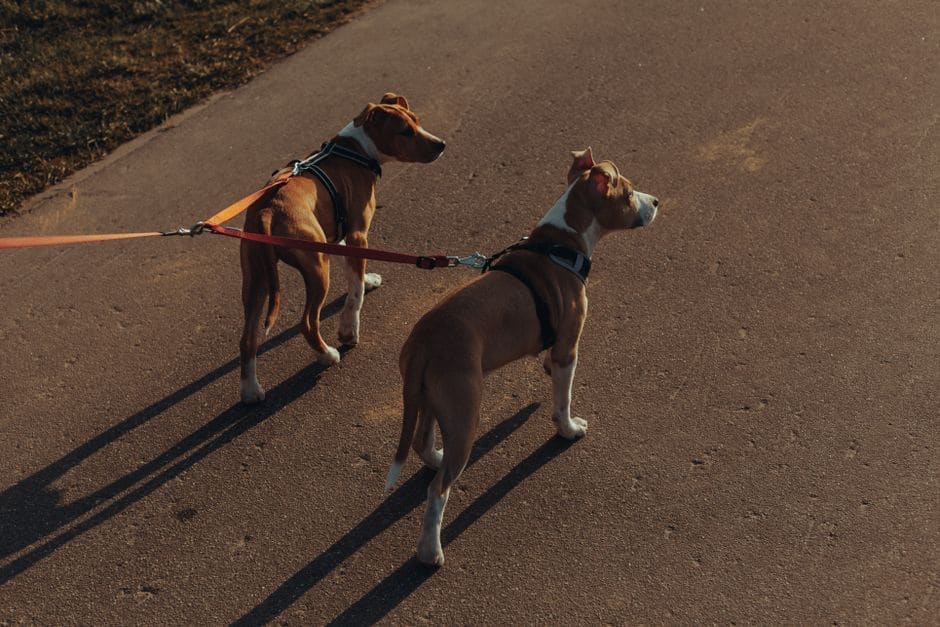
Start with the mechanical facts. The cord is thin, it's under tension, and human hands instinctively grab it when a dog lunges — that combination produces friction burns and lacerations, an injury pattern well documented enough that veterinary and emergency sources warn about it routinely. Dogs suffer their own version when the cord wraps a leg mid-play. None of this requires a defective unit or a careless owner; it requires only the product working as designed at the exact moment instinct takes over, which is precisely the moment leashes exist for.
The training problem is quieter and, over years, more damaging. A retractable lead extends when the dog pulls, which means the device rewards pulling with forward progress — teaching precisely the behaviour every trainer spends months undoing. Constant tension becomes the dog's definition of a normal walk. You are, in the most literal sense, paying for a device that trains your dog to pull, and then possibly paying a trainer to reverse the lesson.
Then there is control, the actual job of a leash. The brake is a small plastic button on a spring mechanism, asked to stop a lunging animal at full extension. Even when it holds, you have no way to reel in a dog that's already out — the handle offers nothing to pull hand-over-hand except the cord you must not touch. Near traffic, near a reactive dog, in any moment where seconds matter, the product's geometry is against you: maximum freedom exactly when you need maximum control.
The alternatives are cheaper and better at both halves of the job. A fixed lead of 1.2–1.8 metres for streets gives you actual control and teaches a loose-leash habit. A long line — a simple 10-metre lead with no mechanism — gives a dog real range in an open field with none of the failure modes, and it's the tool professional trainers actually use for recall work. Neither costs more than a mid-range retractable, and between them they cover every legitimate use case the retractable claims for itself. If the appeal was 'freedom,' the long line delivers more of it, more safely, with a soft flat lead you can actually grab.
If you already own one and use it thoughtfully in empty spaces, you're not doing something reckless, and this isn't a lecture aimed at you. But a recommendation list is a set of choices we'd defend, and this product doesn't make it: the injury pattern is real, the training effect runs backwards, and the control story fails exactly when it matters. We'd rather say that plainly than stay quiet to keep a popular category happy.
How we tested
The Retractable Dog Leashes was scored against the same written rubric we apply to every Walking & Travel product — real-world performance, build quality, ease of use, upkeep and value. Full protocol on our How We Test page.