Mau Modern Cat Tree Review
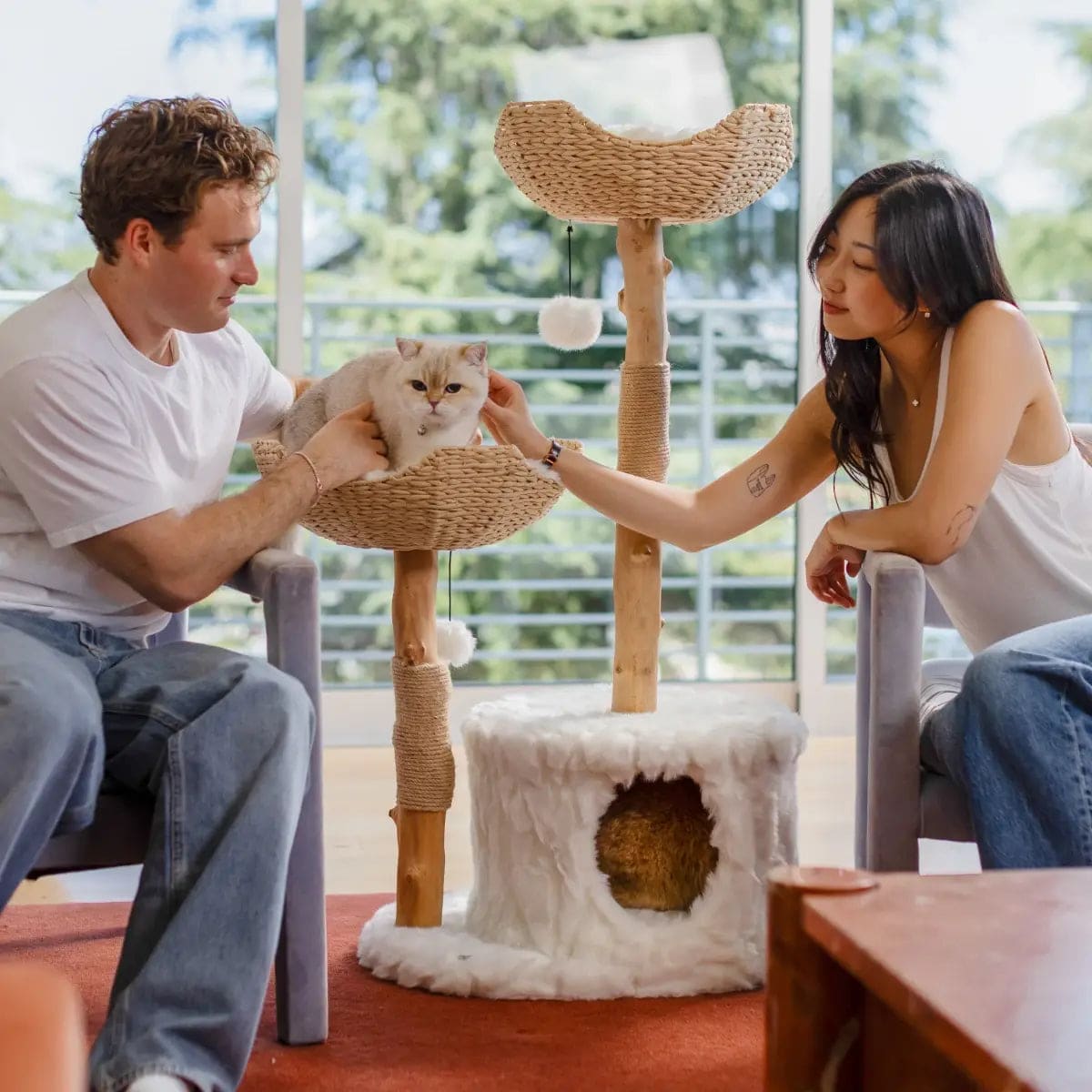
The first cat tree we'd voluntarily put in a living room. Real wood, sculptural design, and — the detail that justifies the price — every wear part is replaceable, so it's furniture you maintain rather than replace.
- Material
- Solid wood frame, sisal, plush baskets
- Design
- Modern sculptural, replaceable parts
- Best for
- Homes where the cat tree lives in view
Reasons to buy
- Actually beautiful — solid wood, not carpet-wrapped cardboard
- Wear parts (sisal, baskets, cushions) sold as replacements
- Stable under multi-cat launch-and-land abuse
- Sustainably crafted, per the brand's stated sourcing
Reasons to avoid
- Costs multiples of a pet-store tree
- Assembly is real furniture assembly
- Waitlists happen on popular models
The standard cat tree is an apology: beige carpet cylinders you hide in a corner and replace every two years when the sisal shreds and the base wobbles. Mau's entire pitch is that cat furniture can be furniture — real wood, sculptural branching designs, the kind of object you'd photograph on purpose rather than crop out of the frame. After months with one in a two-cat household, the pitch holds, and it has quietly changed how we think about the whole category.
Stability is the first test any tree fails, and this one didn't. Two adult cats doing synchronized launches — the load case that kills pet-store trees — produced sway you could see and worry you couldn't justify; the wood frame and weighted base simply absorb it. That matters beyond your peace of mind: cats read instability, and a tree that shifts underfoot gets quietly abandoned for the bookshelf you didn't want them on. The baskets became the contested sleeping spots within a day, which in cat terms is a five-star review.
The detail that converts price into value is replaceable parts. Sisal posts shred — that's their job, the entire point is sacrificing the post to save the sofa — and Mau sells the posts, cushions and baskets individually. The brand's framing is 'invest once, maintain forever,' and mechanically that's true: the expensive wooden skeleton never wears out, the cheap consumables do, and you can buy them. Compare that with the disposable-tree cycle, where the first shredded post sentences the whole structure to the curb, and the luxury pricing starts to look like a different payment schedule rather than a different total.
Placement decides how much use the tree actually gets, and it's worth deciding before you order rather than after. Cats climb to supervise, which means a tree in the room where the household actually lives gets used constantly, while the same tree exiled to a spare room becomes expensive sculpture. Near a window is the classic upgrade — bird television justifies a lot of furniture — and the good news is that a tree this presentable removes the usual reason for exile. You're no longer hiding the ugly thing; you're placing the nice one.
Two practical notes before you order. Assembly is real furniture assembly — clear an afternoon, follow the sequence, and don't improvise, because the stability you're paying for is built in the joints. And popular models go onto waitlists, so this is not the purchase to start the week a new kitten arrives; order ahead of need, not at the moment of it.
Be clear-eyed about what you're paying for. A functional tree costs a fraction of this, and cats do not care about Scandinavian silhouettes — a cat on a beige carpet cylinder is exactly as happy as a cat on sculpted wood. You're buying the version that doesn't uglify your living room, and if the tree is going to stand in view of your sofa for a decade, seen every single day, that's a real category of value. For hidden-corner duty, buy cheap and skip the guilt. For the main room of the house, this is the first tree we'd actually choose to look at.
How we tested
The Mau Modern Cat Tree was scored against the same written rubric we apply to every Cat Furniture product — real-world performance, build quality, ease of use, upkeep and value. Full protocol on our How We Test page.